Research fields
Research in our Laboratory of Bionanostructures focuses on the following areas:
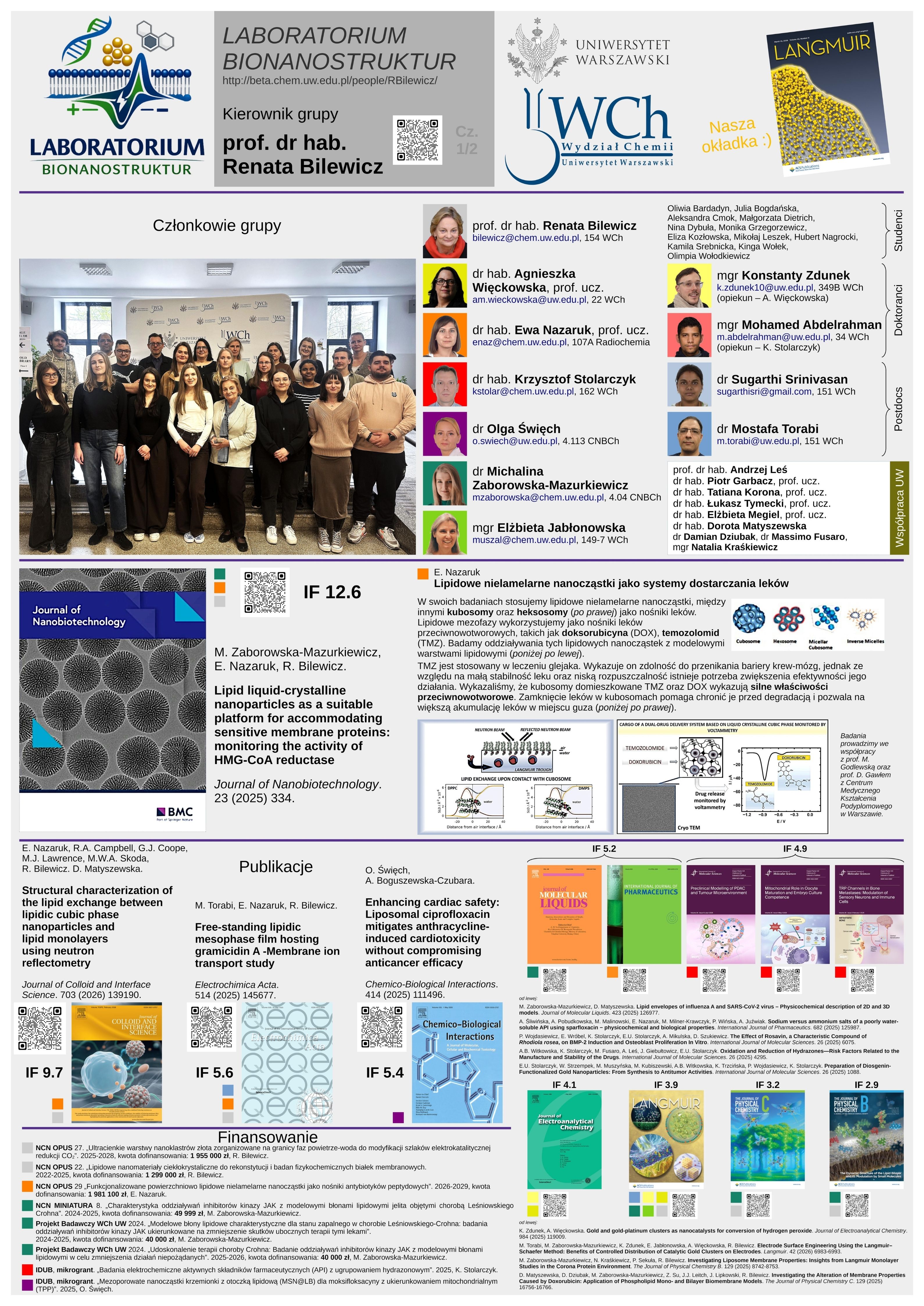
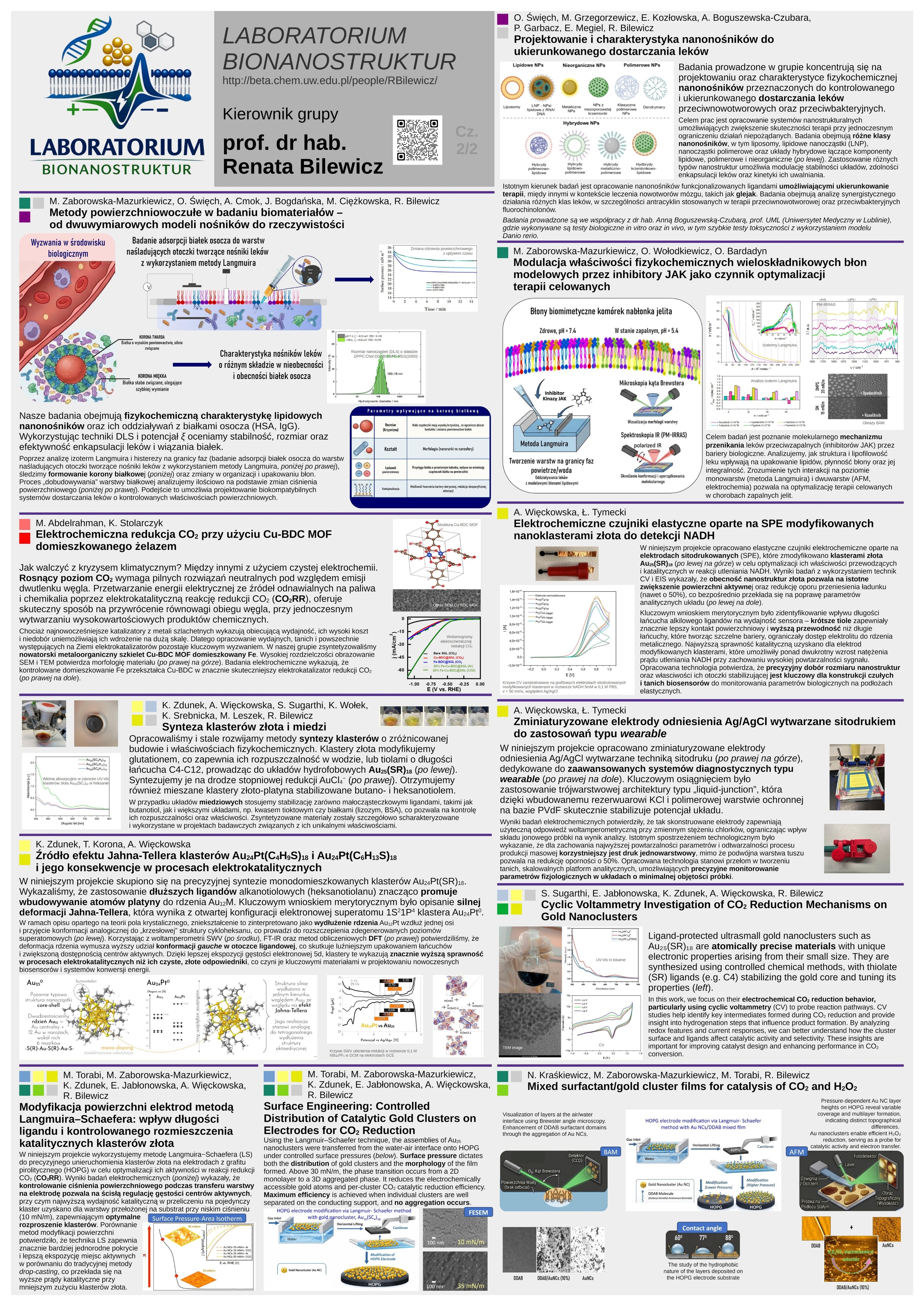
- The utilization of molecular self-assembly, Langmuir-Blodgett films, as well as metal nanoparticles and clusters protected by thiol monolayers for applications in electrocatalysis, enzymatic catalysis, and molecular recognition at water-air and electrode-solution interfaces. We design new types of films and nanostructures on electrodes for the catalytic reduction of small molecules such as O2 and CO2, or the oxidation of glucose, H2O2, and NADPH. We characterize the electrode surface using a wide range of electrochemical methods and scanning probe microscopy, and we describe electron, ion, and molecular transport in supramolecular and biomolecular layers. Applications include enzymatic fuel cells and bioelectrochemical sensors.
- We apply electroanalytical and surface analysis methods to study lipid mono- and bilayers, as well as lipid liquid-crystalline mesophases as biomimetics of biological membranes. Using various physicochemical methods, we investigate the behavior of redox-active proteins immobilized in the membrane, drug penetration, and interactions with contaminants, as well as micro- and nanoparticles targeting biological membranes.
- We investigate lipid liquid-crystalline nanoparticles and liposomes as potential carriers for drugs, peptides, and membrane proteins. Research on lipid nanoparticles as drug delivery systems includes the analysis of their stability and the controlled release of the studied drugs using spectroscopic and electrochemical methods.
- We construct biomimetic models of inflamed small intestine cell membranes and analyze the effects of anti-inflammatory drugs (JAK kinase inhibitors and naltrexone), both individually and in combination therapy, on their properties. The research also considers the application of drug carriers (liposomes, cubosomes) to enhance treatment efficacy and minimize the side effects of the drugs.